
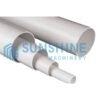
Let us introduce the PVC Pipe Production Line to you.
What Is PVC Pipe Production Line?
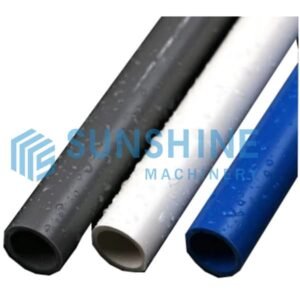
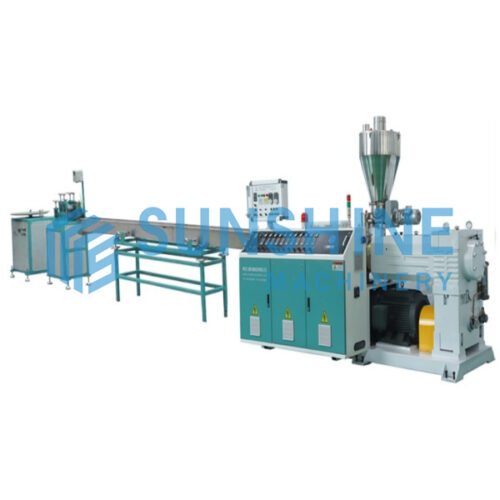
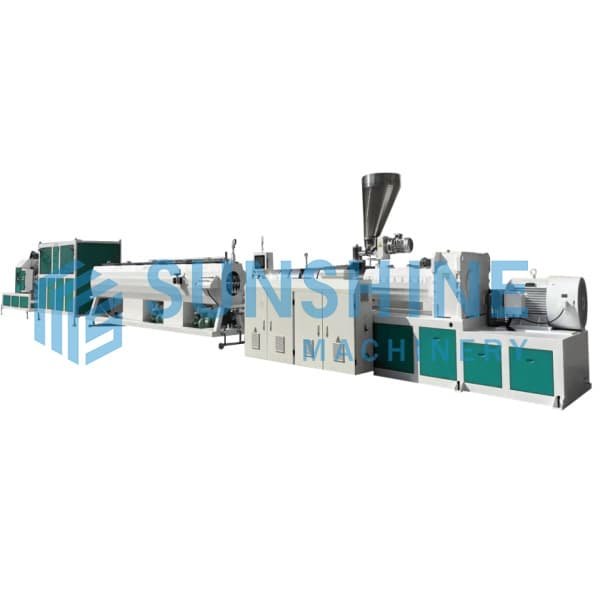
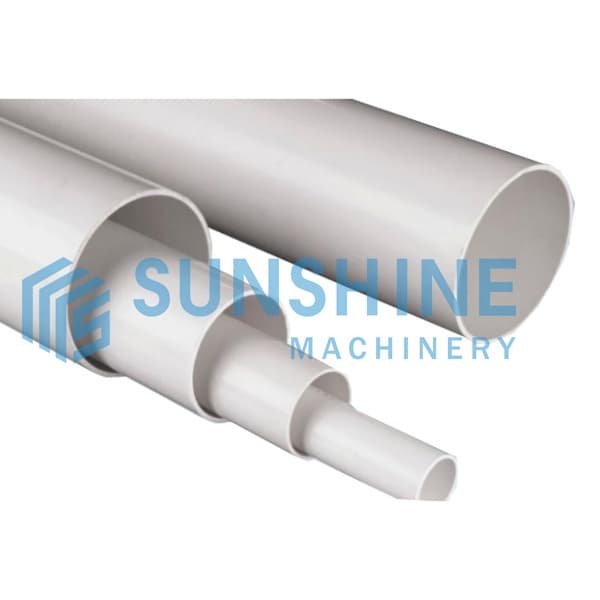
PVC Pipe Production Line is an automated production line for rigid PVC pipes with uniform cross-sections and solid material.
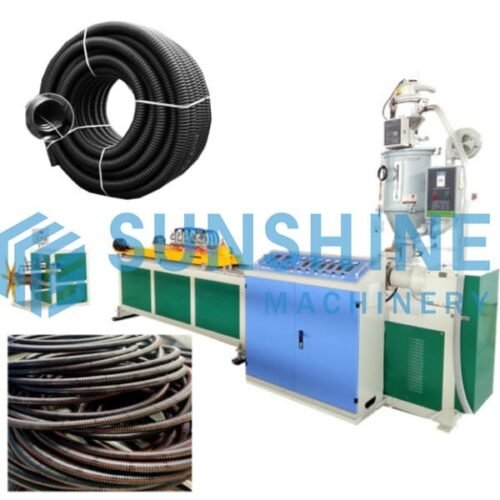
Unlike corrugated pipes, solid-wall pipes rely on their thicker walls for strength and are widely used in pressurized water supply and drainage systems, as well as electrical protection systems.
What are the components of PVC pipe production line?
Mixing Unit:
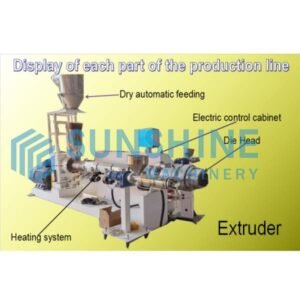
Hot and cold mixing of PVC resin powder, stabilizers, and various additives. Conical Twin-Screw Extruder: This is the core component, utilizing the shearing and heating action of the twin screws to plasticize the powder and extrude it uniformly.
Extrusion Die (Die Head):
Determines the outer diameter and wall thickness of the pipe, typically employing a support or spiral structure to ensure uniform melt distribution.
Vacuum Shaping Water Tank:
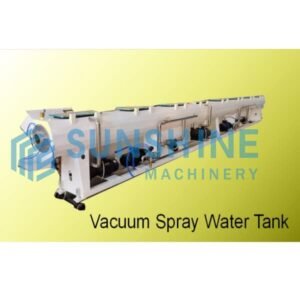
Uses vacuum negative pressure to tightly press the pipe against the outer diameter of the sizing sleeve, and uses circulating water for cooling and shaping.
Traction Machine:
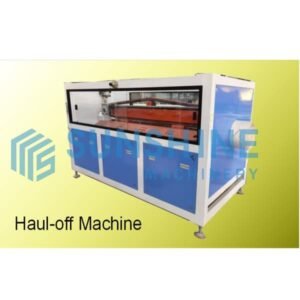
Employs a multi-track or dual-track structure to smoothly pull the pipe out of the die; the speed must be strictly synchronized with the extrusion speed.
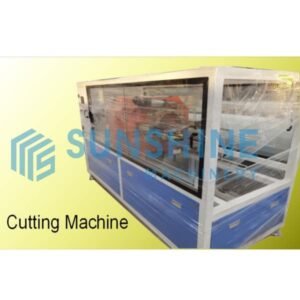
Cuter:
Typically a planetary cutter or chipless cutter, automatically cutting the pipe to a preset length.
Flanging Machine (Optional):
Processes U-shaped, R-shaped, or rectangular socket ends on the pipe as needed, facilitating pipe connection.
What are the technical features of machine?
High-efficiency plasticizing: Utilizing a special screw structure designed for PVC powder, high output is achieved with low temperature rise, avoiding material decomposition due to heat.
High automation precision: Equipped with a PLC touchscreen control system, enabling synchronized adjustment throughout the entire production line from feeding to cutting.
Strong adaptability: By changing molds and adjusting the formula, pipes for various applications, such as UPVC, CPVC, or modified PVC-M, can be produced.
Superior finished product performance: Solid-wall pipes possess extremely high tensile strength, chemical corrosion resistance, and excellent electrical insulation properties.
What are the application areas of pipes?
Water Supply and Drainage Engineering: Urban water supply pipelines, building indoor drainage and sewage systems.
Power and Telecommunications: Underground high-voltage cable sheaths, communication fiber optic cable protection conduits (usually red or blue solid-walled pipes).
Industrial Piping: Specialized pipelines used in chemical plants and laboratories for transporting acidic and alkaline corrosive fluids.
Agricultural Irrigation: Rural water-saving irrigation, farmland drainage systems.