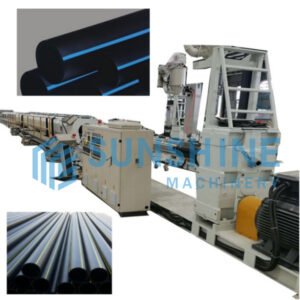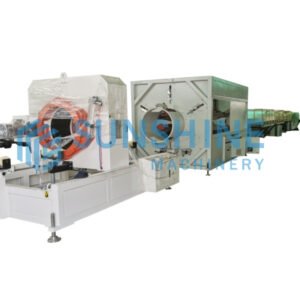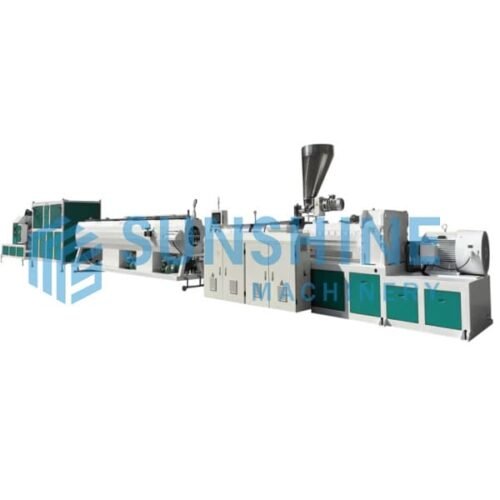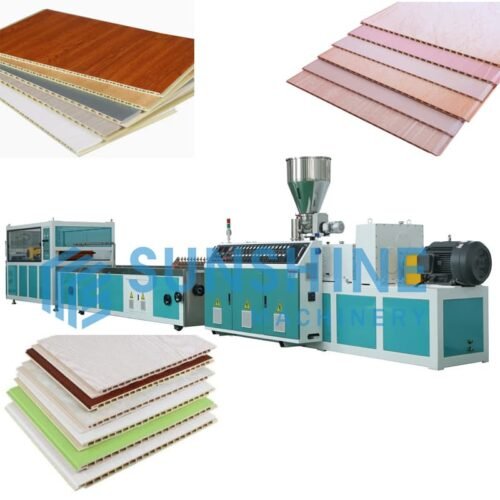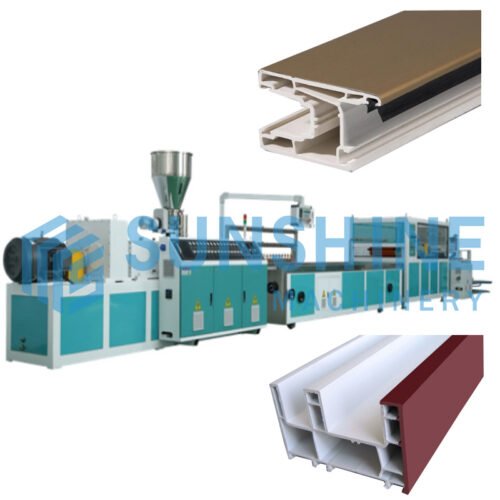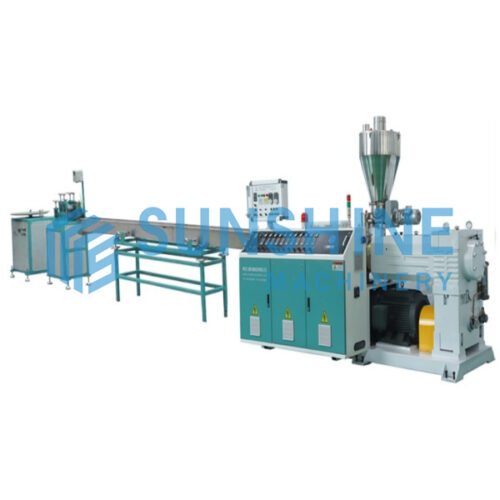

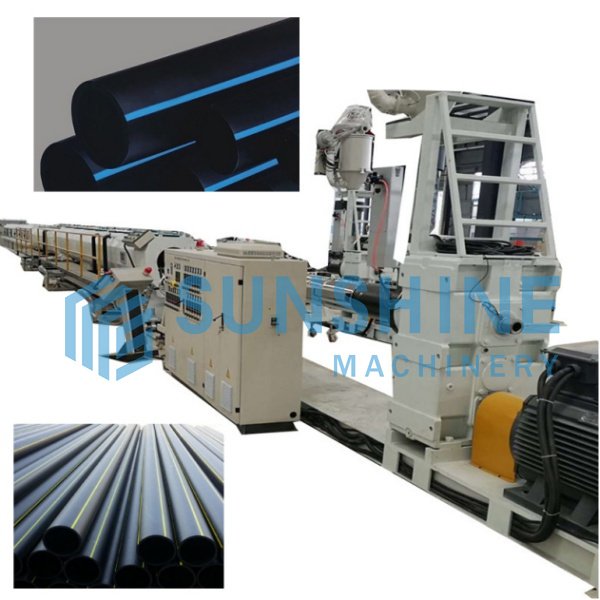
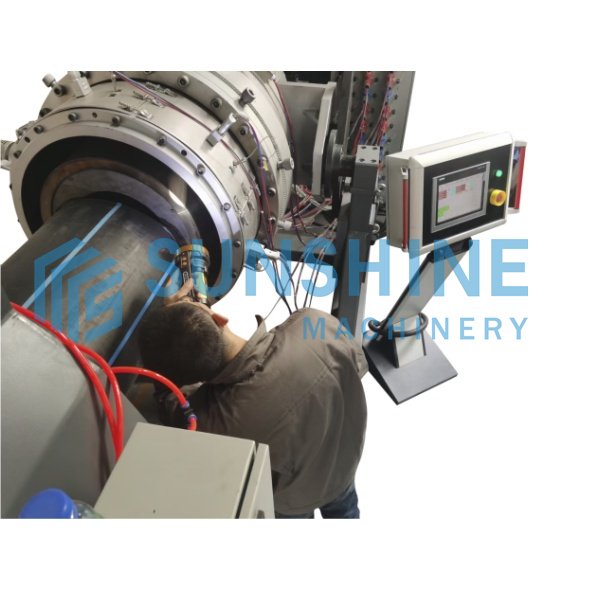
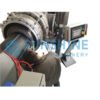
Let us introduce the PE Pipe Production Line to you.
What Is PE Pipe Production Line?
PE Pipe Production Line is a type of equipment used for extruding flexible and corrosion-resistant solid pipes made from polyethylene (mainly HDPE). It is a core piece of equipment in the global pressurized water supply and gas transmission industry.
What are the components of PE pipe production line?
Single-screw extruder:
Employs a dedicated screw with a high length-to-diameter ratio (typically 30:1 or 38:1) and a slotted feed cylinder to achieve high-yield plasticization of PE raw materials at low temperatures.
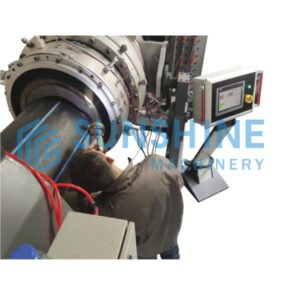
Extrusion die (spiral or basket type):
Specially designed internal flow channels eliminate material memory stress, ensuring uniform pipe wall thickness and a smooth surface.
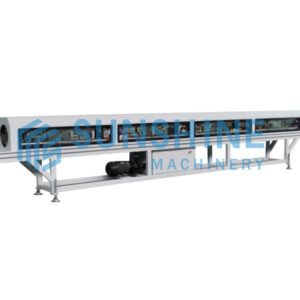
Vacuum sizing tank:
Uses vacuum negative pressure to adhere the molten pipe blank to the sizing sleeve, utilizing circulating cold water for initial cooling and precise pipe diameter fixation.
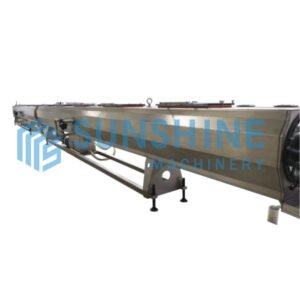
Spray cooling tank:
A long-distance continuous spray cooling system ensures that thick-walled pipes are thoroughly cooled from the surface inwards, preventing later deformation.
Traction machine:
Employs dual-track or multi-track traction depending on the pipe diameter, maintaining high synchronization with the extrusion speed.
Cuter:
Uses a planetary cutter (large diameter) or a chipless cutter (small diameter) to ensure clean cuts.
Stacking racks or coilers:
Large-diameter pipes use stacking racks, while small-diameter pipes (below 63mm in diameter) are typically coiled using coilers.
What are the technical features of machine?
The produced pipes are impact-resistant, low-temperature resistant (down to -60℃), and possess excellent flexibility, allowing them to withstand ground settlement without easily breaking.
Long lifespan and corrosion resistance: PE pipes do not scale or breed bacteria, with a service life of over 50 years.
Synchronous control system: The entire production line typically employs PLC closed-loop control, enabling automatic matching of extrusion volume and traction speed to ensure a constant pipe weight per meter.
Good heat fusion properties: The equipment produces pipes with precise geometric dimensions, perfectly suited for heat fusion or electrofusion connections, achieving a lifespan for both the joint and the pipe itself.
What are the application areas of pipes?
Water Supply Systems: Main water supply pipelines and distribution networks for urban and rural areas.
Gas Transmission: Underground natural gas, coal gas, and liquefied petroleum gas transmission (pipe materials are mandatory according to national standards).
Industrial Pipelines: Transmission of corrosive media in chemical plants, slurry transportation in mines, and trenchless pipework projects.
Agricultural Irrigation: Main pipelines for modern, efficient water-saving irrigation and drip irrigation systems.